Barn Management 101: How to Keep Accurate Records Across Multiple Horses

EquineOps
Mar 23, 2026
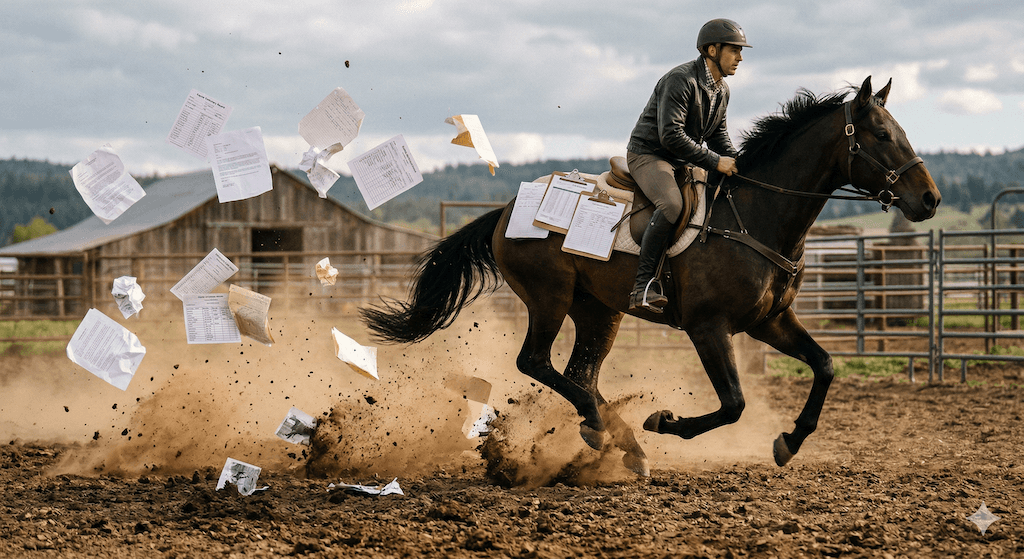
When you have two horses, you can keep it all in your head. When you have twenty, you can't. Whether you're using barn management software, a spreadsheet, or a notebook, here's how to set up horse record keeping that actually works — and why it matters more than most trainers think.
The Five Records That Matter Most
Don't try to track everything. Start with the five that cause the most problems when they slip:
Vaccinations and deworming. What was given, when, and what's due next. A missed Coggins or expired vaccine can cost you a show entry or delay a sale.
Farrier visits. Date, shoeing type, next due date. Multiple horses on different cycles is where things fall apart first.
Feed programs. What each horse gets — grain, hay, supplements. Good stable management means the morning your regular groom calls in sick, the feed plan exists somewhere other than their head.
Vet notes. Anything the vet says or does. You won't remember the details in six months, but the record will.
Ongoing treatments. Who gave the meds, when, and what's the plan. Critical when multiple people are involved in a horse's care.
Three Rules That Make It Stick
Make it easy. If logging something takes more than a minute, it won't happen consistently. Your equine management system needs to work from a phone or tablet in the barn, not just a computer in the office.
Get it out of one person's head. If the only person who knows the deworming rotation is your barn manager, you have a single point of failure. Records should belong to the barn, not one person.
Track who did what. Attach a name and a timestamp to every action. Not for blame — for accountability and troubleshooting. If a horse reacts to a dewormer, you need to know what was used and who gave it.
Look Forward, Not Just Back
For every horse, you should be able to answer: When is the next farrier visit? When are vaccines due? When does the Coggins expire? Records that only look backward are useful. Records that also look forward prevent problems before they start.
Start Now, Even If It's Imperfect
Most barns start keeping records right after something goes wrong — a missed vaccine, a farrier visit three weeks overdue, a treatment nobody knew was their job. Don't wait for that moment. Log the next farrier visit. Write down today's feed plan. Note what the vet said. Build from there.
A basic system you use every day beats a perfect one that never gets set up. Whether that's a barn management app on a shared tablet, a simple spreadsheet, or even a well-organized binder — the best horse management tool is the one your whole team will actually use. That's why we built EquineOps, to be the best solution for the whole team. Try it for free today.